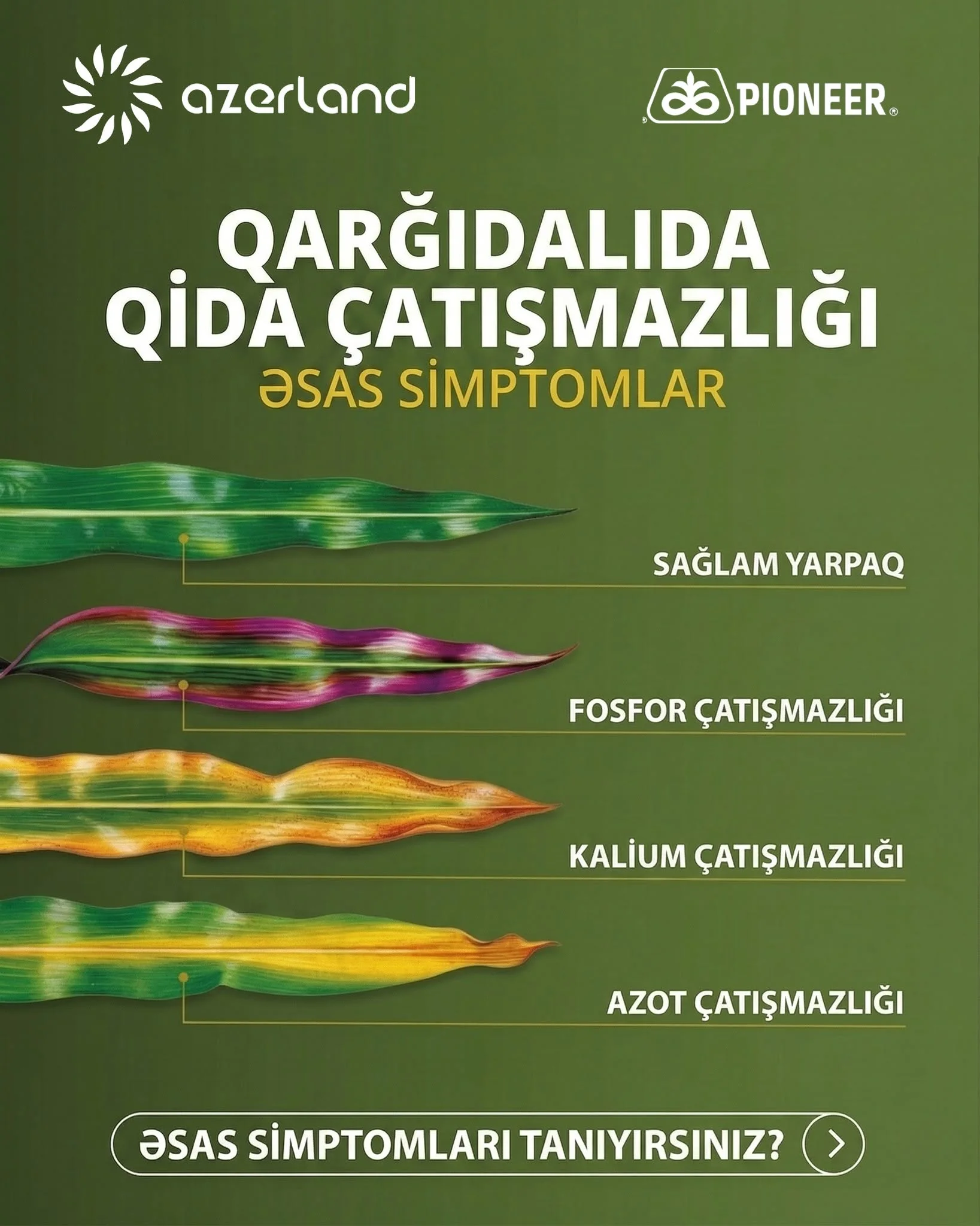
Mineral nutrition in corn is of fundamental importance for the plant to achieve its full yield potential. Early identification of visual nutrient deficiency symptoms increases the efficiency of fertilization management throughout the growing season.
By the time visual symptoms become clearly visible, the plant has already suffered certain yield losses. For this reason, continuous field monitoring, combined with leaf and soil analyses, allows for more precise interventions such as top-dressing or foliar applications (micro-fertilization). This, in turn, reduces losses and improves crop performance.
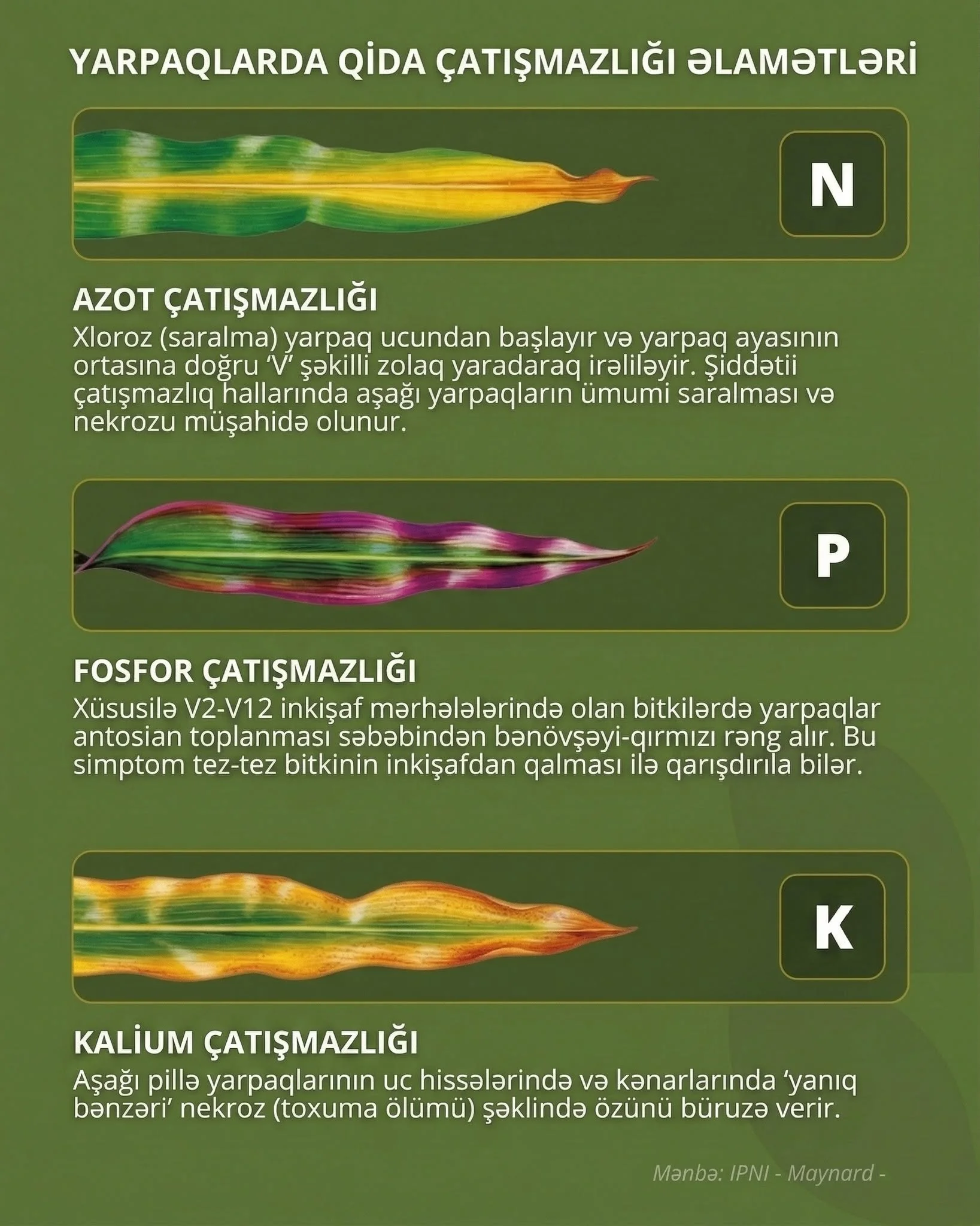
Leaves: Chlorosis (yellowing) starts at the tip of the leaf and progresses along the midrib in a "V" shape. In severe deficiency cases, general yellowing and necrosis of the lower leaves are observed.
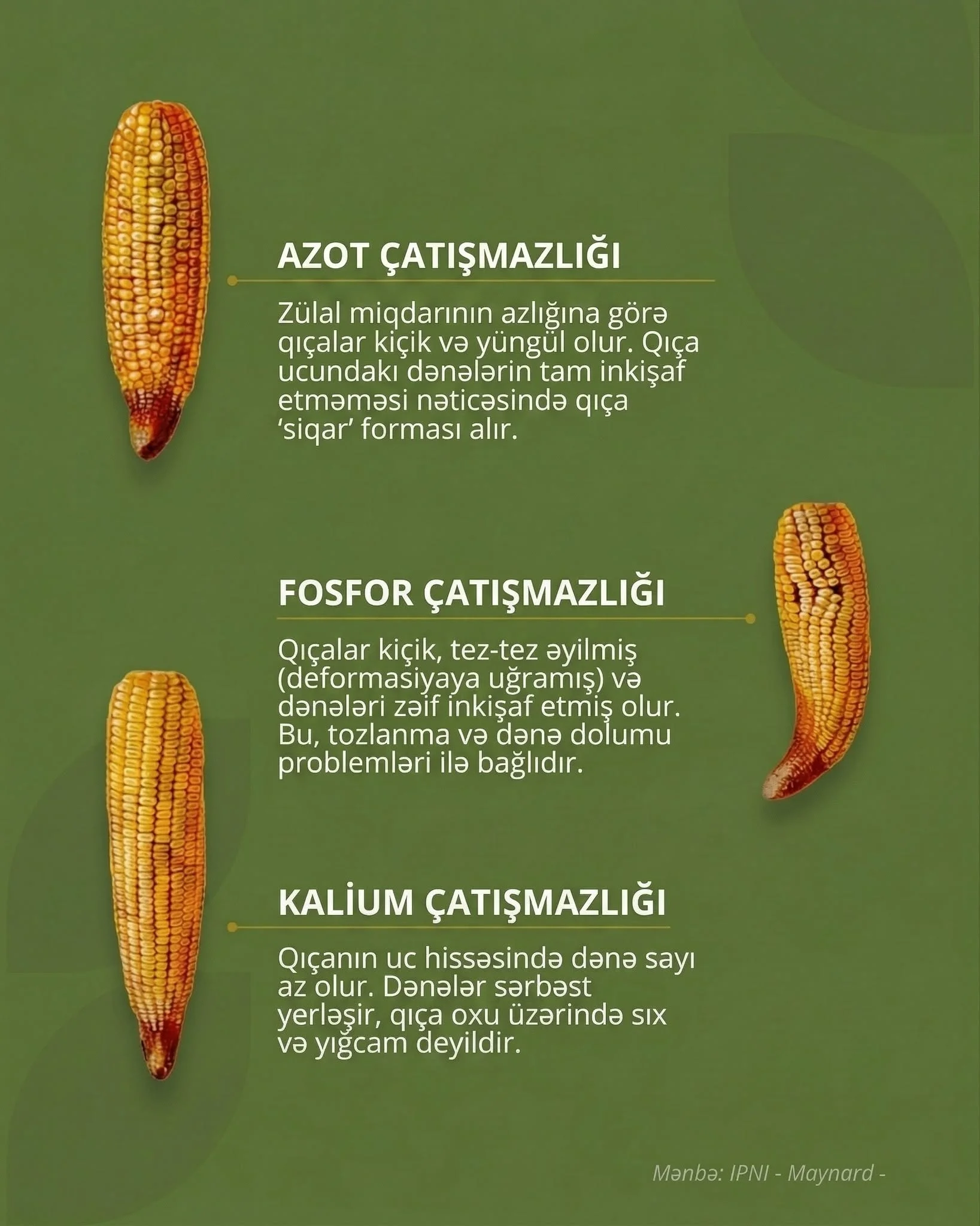
Ears: Due to low protein content, ears remain small and lightweight. Incomplete grain development at the tip causes the ear to take on a "cigar" shape.
Leaves: Especially in the V2–V12 growth stages, leaves turn a reddish-purple color due to anthocyanin accumulation. This symptom can often be confused with stunted growth.
Ears: Ears are small, frequently curved (deformed), and feature poorly developed kernels. This is directly linked to pollination and grain-filling issues.
Leaves: Manifests as "burn-like" necrosis (tissue death) and yellowing along the margins and tips of the lower leaves.
Ears: Kernel count is low at the tip of the ear. Kernels are loosely spaced and lack a compact, dense arrangement along the cob.
Timely field monitoring and a well-structured mineral nutrition program will help prevent yield losses.


 AZ
AZ RU
RU